private AI · video analysis
Ask your video archive a question
Recorded meetings, trainings, store or production cameras: a model on a box in your building transcribes and indexes them, so you can search and summarise without uploading a single file.
- Data stays in your building
- You own the model and the agent
- No subscription required
What the agent does
- 01
Search what was said and shown
Find the moment a topic came up in hundreds of hours of meetings or trainings, and jump to it.
- 02
Summaries and minutes
After each recording: a summary, decisions and action items in your template.
- 03
Count and flag camera footage
People in a zone, a queue that is too long, a part that looks wrong on the line, flagged for a person to check.
How we prepare it
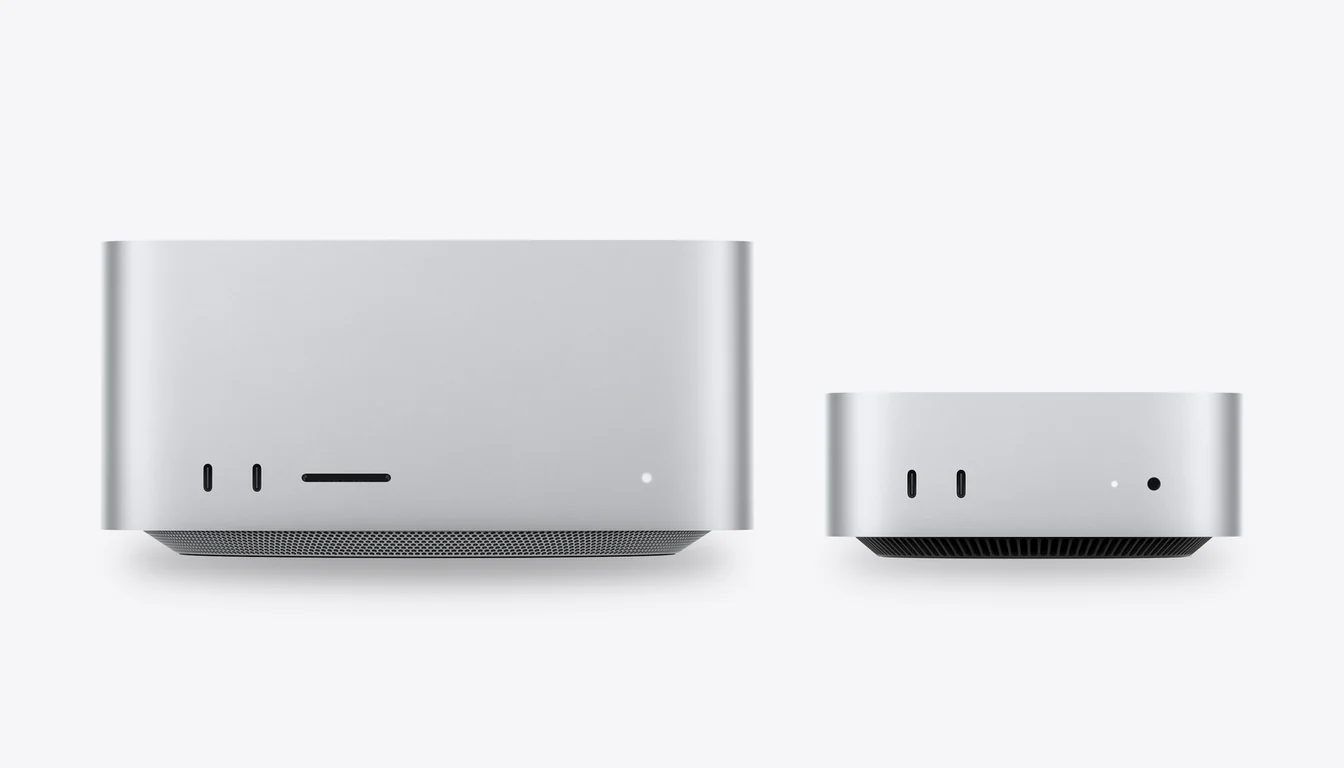
The box and the open models are the same ones anyone can buy: a Mac Studio or a GB10-class machine, Qwen, Llama, Gemma or Mistral. What differs is how they are prepared for your work, and that preparation is what we do.
- 01
Audit your data
We look at your documents, recordings and the tasks that eat your week, and agree on one task for the pilot.
- 02
Build a test set
From your own documents we write the questions the model has to answer and the answers it has to give. Everything after is measured against that set.
- 03
Tune the model, train the agent
We fine-tune an open model on your documents and teach the agent your workflows: your templates, your archive, your forms.
- 04
Check before handover
The model has to pass your test set before we hand it over. You see the score, not a demo.
Then you own it: the box, the model, the agent, the test set and the admin keys. Support and updates are there if you want them.
We have no ready-made model for any field yet. We are taking a few pilots for 2027, and each model is prepared from that client's own data.
What an answer looks like
The agent answers from your files and names the document and section it used, so a person can check it in seconds.
You: Where in last week's stand-ups did we discuss the safety briefing?
Twice: in Tuesday's stand-up and in Thursday's, both times about the new forklift route.
↳ Source: standup_tue.mp4 · 00:12:31; standup_thu.mp4 · 00:04:10
Who builds it
Video is where we started. Life2Film has turned raw footage into films since 2014; its engine scores frames, finds scene changes and analyses audio on the device. Searching your recordings on your own hardware is the same kind of work.
AI video since 2014
The first Life2Film shipped in 2014 as a web service. The rebuilt app scores every frame and finds scene changes on the device, on a Rust engine of 11 crates, and has been in the App Store since August 2026.
Life2Film →Agents, in the open
solo-factory (57 skills and 2 agents for Claude Code), a coding agent written in Rust and an MCP server that searches code and past sessions. All open source.
Open source →Hackathons
2nd place at the Supabase Hackathon, 3rd of 78 at a San Francisco cyberdefense hackathon with a real-time video tool, and a judge at Cal Hacks 13.0 in October 2026.
Write-ups →Founder: Rustam Salavatov · About the company
What the law says
-
No federal law covers office or training video as such. What is usually at stake is trade secrets, and information counts as one only if its owner has taken reasonable measures to keep it secret.
Meeting recordings and training videos often hold exactly that information. Keeping them on your own hardware is a measure you can point to.
For information, not legal advice. Checked against the official texts on 5 November 2026.
Three ways to start
Model
An open model tuned on your documents that answers with sources. Runs on hardware you already have, if it is strong enough.
Model + agent
Plus an agent that does the work in your tools: drafts from your templates, searches your archive, fills your forms.
Turnkey box
Everything on a compact box we install in your office and hand over to you.
Questions
Do we need new cameras?
Usually not. We read the recordings your system already stores, or the camera streams on your network.
Is it live?
Both are possible. Indexing after the fact is simpler; live alerts need the M or L size.
Does any of our data go to a cloud?
No. The model runs on the box in your office, and the training happens there too. The box can work with no internet access at all if your policy asks for that.
Why on-premise?
Some data should not leave the building: privileged client files, patient records, tax files. Keeping the model in your office is the simplest way to keep that data under your control. We do not sell a compliance certification; your own counsel decides what your obligations require.
Which models?
Open models whose licences allow business use, such as Qwen, Llama, Gemma or Mistral. We pick one that fits your box and your work, and can swap it when a better one ships.
Who owns it?
You do: the hardware, the tuned model, the agent and its settings. Nothing stops working if you stop paying us. Support and updates are optional.
How much does it cost?
It depends on the size and the work. Tell us what you need and we will send a quote. We are taking a small number of pilot clients and agree the pilot scope with each.
What do we need to provide?
One person who knows the work, the documents or video the AI should use, and a place for the box with power and a network port.
What a pilot looks like
- 01
Call
We talk through your documents and pick one task.
- 02
Data check
We look at the files that task needs and tell you what is usable.
- 03
Test set
Questions and expected answers, written from your own documents.
- 04
First version on the box
The tuned model and the agent running in your office.
- 05
Review
We run the test set together and decide what comes next.
How long each step takes depends on your data, so we agree the scope before we start.
Ask for a pilot
Tell us what the AI should work with. A person reads it and replies by e-mail within two working days.
Sold, installed and supported in the US by SuperDuperAI, Corp., a Delaware public benefit corporation.
Mac mini and Mac Studio are trademarks of Apple Inc. SuperDuperAI is not affiliated with Apple.